
Rum Glasses: Which Glass Actually Makes Your Rum Better?
The guide distilled from 227 forum posts, 53 participants, and five years of discussion
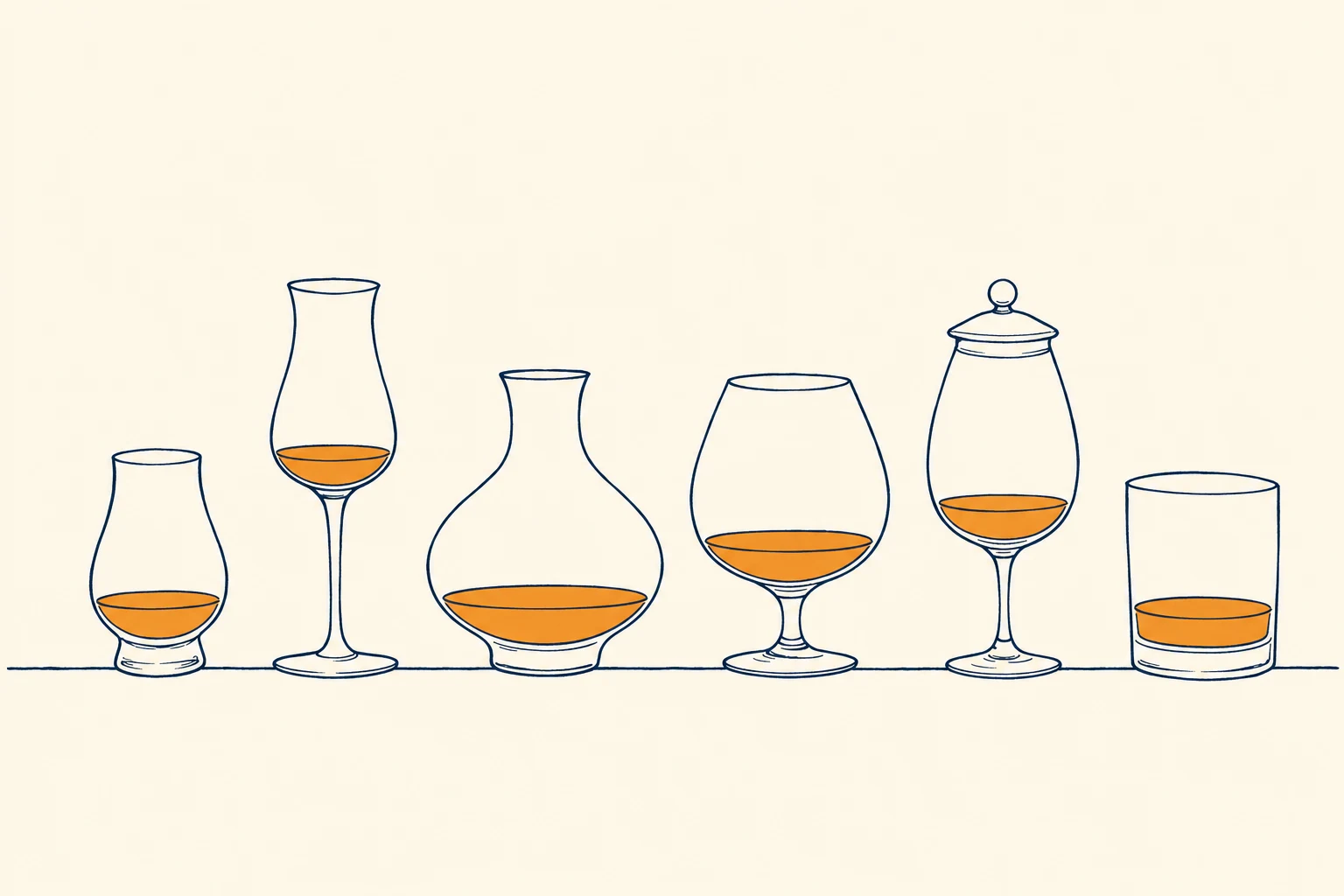
Rum glasses compared honestly: nosing glass, Glencairn, 1920s Blenders & Riedel – distilled from 227 community posts, with measurements and practical tips.
- The short answer: For neat tasting, use a tulip-shaped nosing glass – wide at the bottom, tapered at the top. The tumbler is for drinking on ice, not for nosing.
- The community favorite: The 1920s Blenders Glass – 67% pick it in our thread poll. Behind it: the Glencairn at 52%.
- The most surprising insight: There is no single best glass. In a community experiment, the entire glass ranking flipped once a 78% ABV rum entered the picture.
- Budget: A Glencairn for around €7 delivers most of the experience. From there, the sky is the limit – up to a hand-blown one-off from a garden workshop.
- Community science: One member measured eight glasses – height, volume, opening, drinking lip. The full table is in this guide.
- In practice: Pour 2 cl, use a fresh glass per rum, cover the glass to preserve aromas – the most important tips from five years of discussion.
227
Forum posts analyzed
53
Participants in the discussion
5 years
The thread has been running
1,522
Likes in the thread
Why this guide is different
In May 2021, Jakob asked a seemingly simple question in our forum: “What are the best tasting glasses to enjoy rum neat?” Five years later, it has grown into one of the most thorough glassware discussions in the rum scene: 227 posts, 53 participants, measurement series done with kitchen scales, side-by-side comparisons of identical rum in different geometries – and a glassblower who by now practically crafts for the community personally.
This guide is the harvest of that thread. I went through all 227 posts, sorted the insights, and combined them with what glassmakers and research have to say. So what you are reading is not another “10 pretty rum glasses” affiliate article, but the collective knowledge of people who taste rum almost daily, and have for years. One thing up front: we don’t sell glasses and we don’t link to affiliate shops. Every mention here is an honest community opinion.
The short answer: which glass for rum?
For neat tasting, use a tulip-shaped nosing glass: wide at the bottom, tapered towards the top. The bowl gives the rum surface area to evaporate, the narrow opening funnels the aromas to your nose. Every serious tasting glass is built on exactly this principle – from the €7 Glencairn to the Riedel rum glass.
As a buying aid, sorted by budget (rough price bands, as of July 2026):
| Budget | Community pick | Who it’s for |
|---|---|---|
| under €10 | Glencairn | Beginners, everyday use, tastings with friends |
| €10–25 | Eisch Jeunesse Rum, Luigi Bormioli Vinoteque, Spiegelau nosing | Upgraders who want crystal and a stem |
| €25–45 | 1920s Blenders Glass, Riedel Rum “Gargano × Neisson” | Enthusiasts, deliberate tasting |
| One-off | Hand-blown glasses (e.g. by glassblower Olaf Tappert) | Connoisseurs, a gift with a story |
The tumbler, by the way – that thick-walled, cylindrical “whisky glass” from the movies – is not a tasting glass. It’s built for relaxed drinking on ice; more on that below.
Why the shape of the glass changes the taste
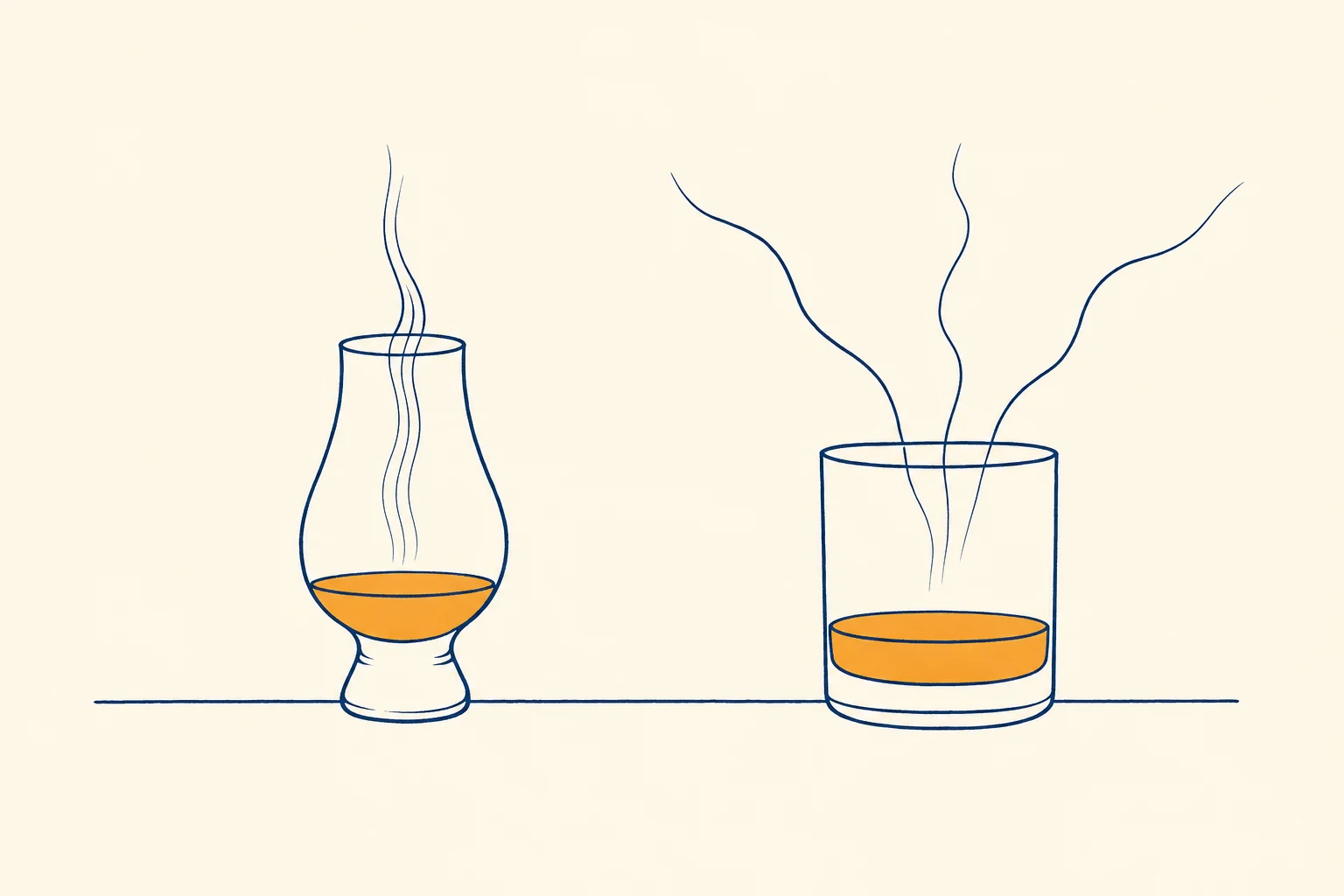
This is not esoterica, it’s physics. Most of what we call “taste” is smell: aroma compounds evaporate from the rum, rise, and hit your olfactory receptors as you sniff. Three properties of the glass control that process:
- The surface area in the bowl. The more rum surface in contact with air, the more aroma compounds evaporate. That’s why tasting glasses are wide at the bottom.
- The taper (the “chimney”). The narrowing shape collects the rising aromas and concentrates them at the opening instead of letting them escape into the room.
- The drinking lip. A straight or slightly flared rim distributes the rum across your tongue differently than an inward-curved one – and changes how hard the alcohol lands.
That this is measurable was shown by a study from Japan: a research team used a “sniffer-camera” to make the ethanol distribution above a wine glass visible (wine at 13 °C). The result: with the tulip shape, the alcohol forms a ring at the rim, while in the center – exactly where your nose belongs – the ethanol concentration is lower. Measured on a wine glass, but the principle holds for any tulip: the shape can spatially separate aroma from booze (Arakawa et al., Analyst, 2015).
The community experiment: ABV has a say
And here comes the insight this thread worked out better than any manufacturer brochure. Community member Lunulata ordered glasses with deliberately different geometries and tasted the same rum across all of them – with a clear ranking. Then he repeated the round with an Australian Beenleigh at cask strength, 78.3% ABV:
“The order came out exactly reversed. […] As alcohol increases, the 1920 becomes even more intense. With this rum it was simply too much for me.” — Lunulata in the thread (translated)
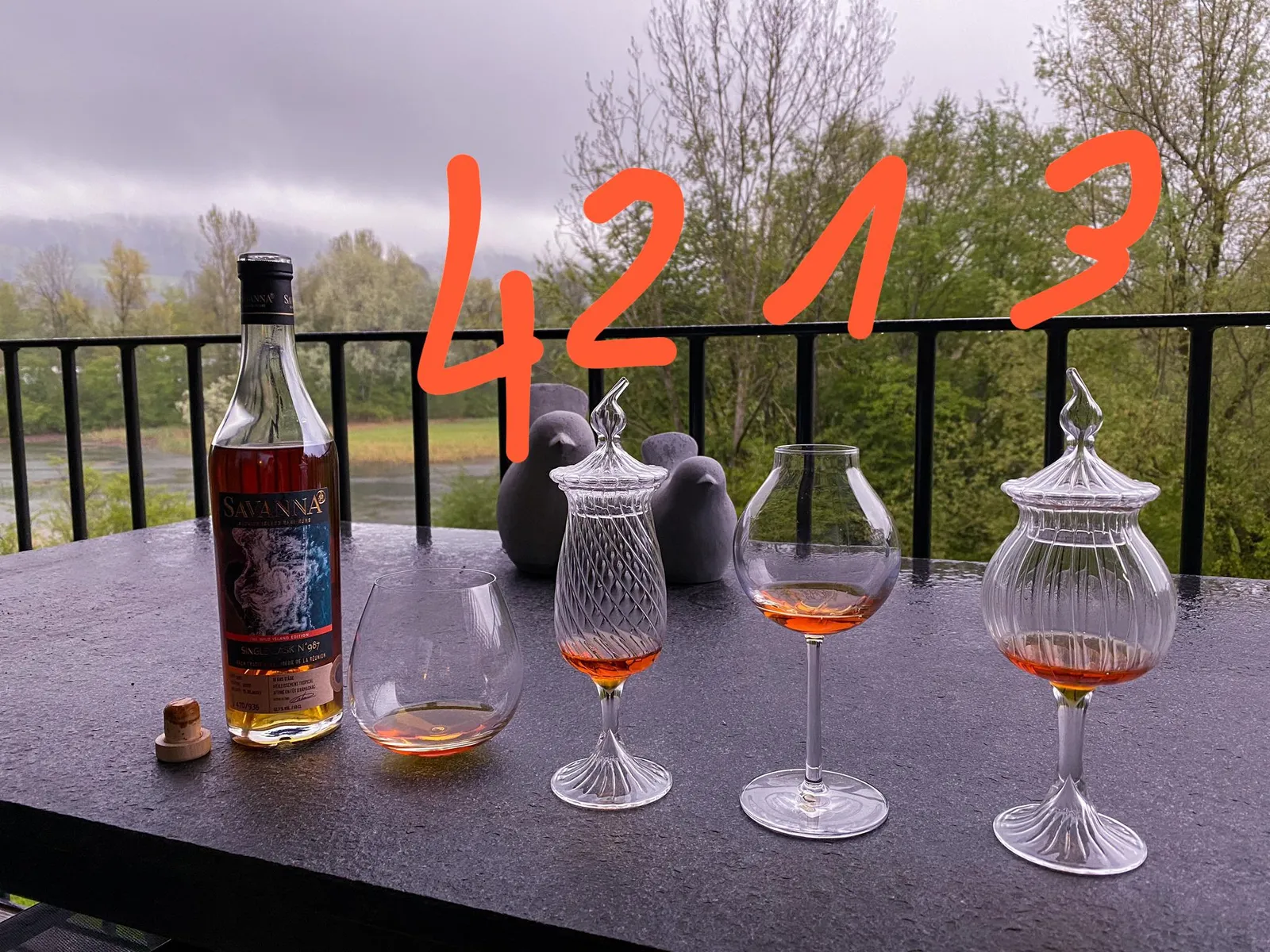
The entire ranking flipped. Glasses that strongly concentrate aromas make everything more intense with a 40% rum – with a cask-strength monster, they concentrate the alcohol too, until it stings. The consequence: there is no single best rum glass. There is the best glass for this rum and for your nose. (If that sounds familiar: it’s the same logic we built the RumX Match Score on – not the objectively best rum, but the best one for you.)
The glass types at a glance
| Type | Shape | Ideal for | Weakness |
|---|---|---|---|
| Nosing tulip (Glencairn, copita & co.) | wide bowl, tapered top | neat tasting, the standard | high proof can sting |
| Onion shape (“Blenders” style) | very wide bowl, narrow opening | quiet, older, complex rums | concentrates the alcohol too |
| Copita / sherry glass | slim tulip on a stem | classic nosing, lab style | small opening, little “room” |
| Balloon / snifter / cognac glass | very wide bowl, short stem | heavy, sweet rums with lots of volume | dissipates fast, lots of alcohol at the nose |
| Grappa / spirits flute | narrow and tall | floral, light distillates | little evaporation surface for heavy rums |
| Tumbler | cylindrical, thick-walled | drinking on ice, cocktails | open shape loses the aromas |
The community ranking: what real rum nerds actually use
Anyone can count mentions – so we asked the question directly: an open poll with multiple choice is running in the thread. 40 participants have cast 97 votes – and because Tappert’s hand-blown one-offs and the Harmony 11 were initially missing as options, a follow-up poll runs in the thread (6 more votes), which we count in:
Forum poll in the glassware thread (as of July 20, 2026): 40 participants, multiple choice. Tappert and Harmony 11 come from the follow-up poll (6 votes).
The result confirms what five years of discussion suggest: the 1920s Blenders leads at 67%, the Glencairn is the standard behind it at 52% – and the two rum-specific nosing glasses (Riedel and Velier/Neisson) sit nearly level in midfield.
The favorites in detail
1. 1920s Blenders Glass – the community darling
By far the most discussed glass of the thread – and at 67%, also the winner of the community poll. Its distinctive onion shape is a recreation of an almost forgotten working glass that whisky blenders used to judge their casks in the 1920s – rediscovered and reissued by whisky writer Angus MacRaild together with Speciality Drinks (background at WhiskyNotes). The extremely wide bowl (225 ml capacity) gives the rum plenty of evaporation surface; the comparatively narrow opening funnels everything towards the nose.
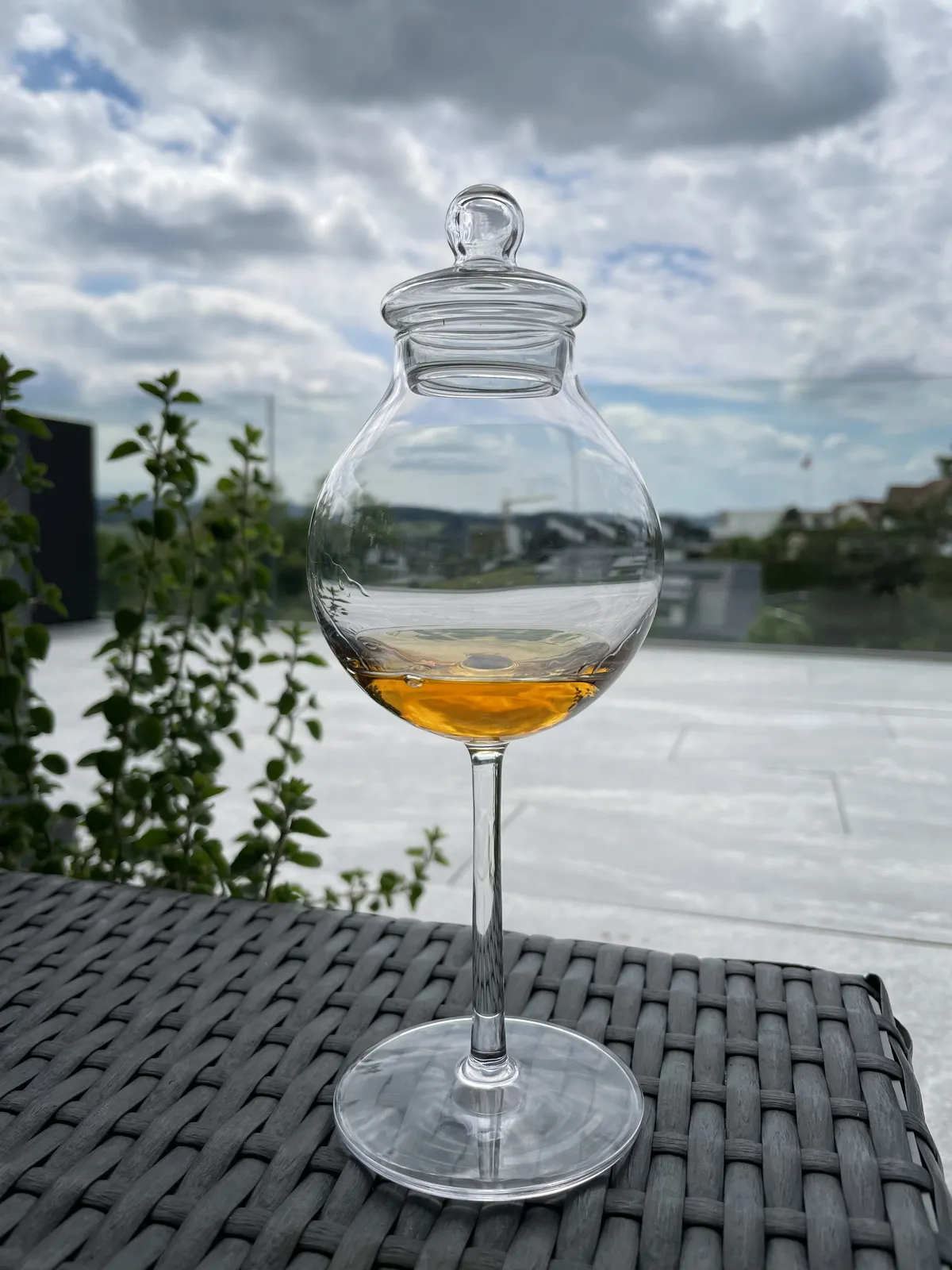
“I also swear by the 1920s Blender glasses. They are quite expensive, but really worth the money!” — mto75 in the thread (translated)
But the community also mapped out its limits cleanly: with high-proof rums, the onion shape concentrates the alcohol until it stings (see Lunulata’s experiment above). And the advertised “internal step” that supposedly “breaks up” alcohol molecules is met with healthy skepticism – after a direct comparison, mto75 files it “rather in the marketing corner”. That’s exactly the kind of honest assessment you won’t find in any manufacturer copy.
Community verdict: The reference glass for deliberate tasting at standard to medium strength. For cask strength, keep a more open glass next to it.
2. Glencairn – the indestructible standard
Launched in 2001 by Glencairn Crystal in Scotland, designed by Raymond Davidson and refined with master blenders from five major whisky houses, derived from the nosing copitas of Scottish labs (the story). Sold by the millions, robust, stemless – and at around €7 per glass, the cheapest serious option in the field.
In the thread, the Glencairn is the pragmatic backbone: sturdy enough for big tasting rounds, good enough for everything but the most ceremonial occasions. The community even has a travel version in service:
“The little sister of the Glencairn […] It looks a bit like a toy, but honestly it does a decent job for the size.” — DevidedByZero on the “Wee Glencairn”
Community verdict: If you buy only one glass, buy this. If you need six, all the more.
3. Riedel Rum “Gargano × Neisson” – developed for rum
One of the few glasses in the field explicitly designed for rum: glassmaker Riedel developed it together with Velier legend Luca Gargano and the Martinique distillery Neisson (Riedel Rum Set 5515/11, background at Velier). An egg-shaped bowl on a long stem, intended for aged and even overproof rums.
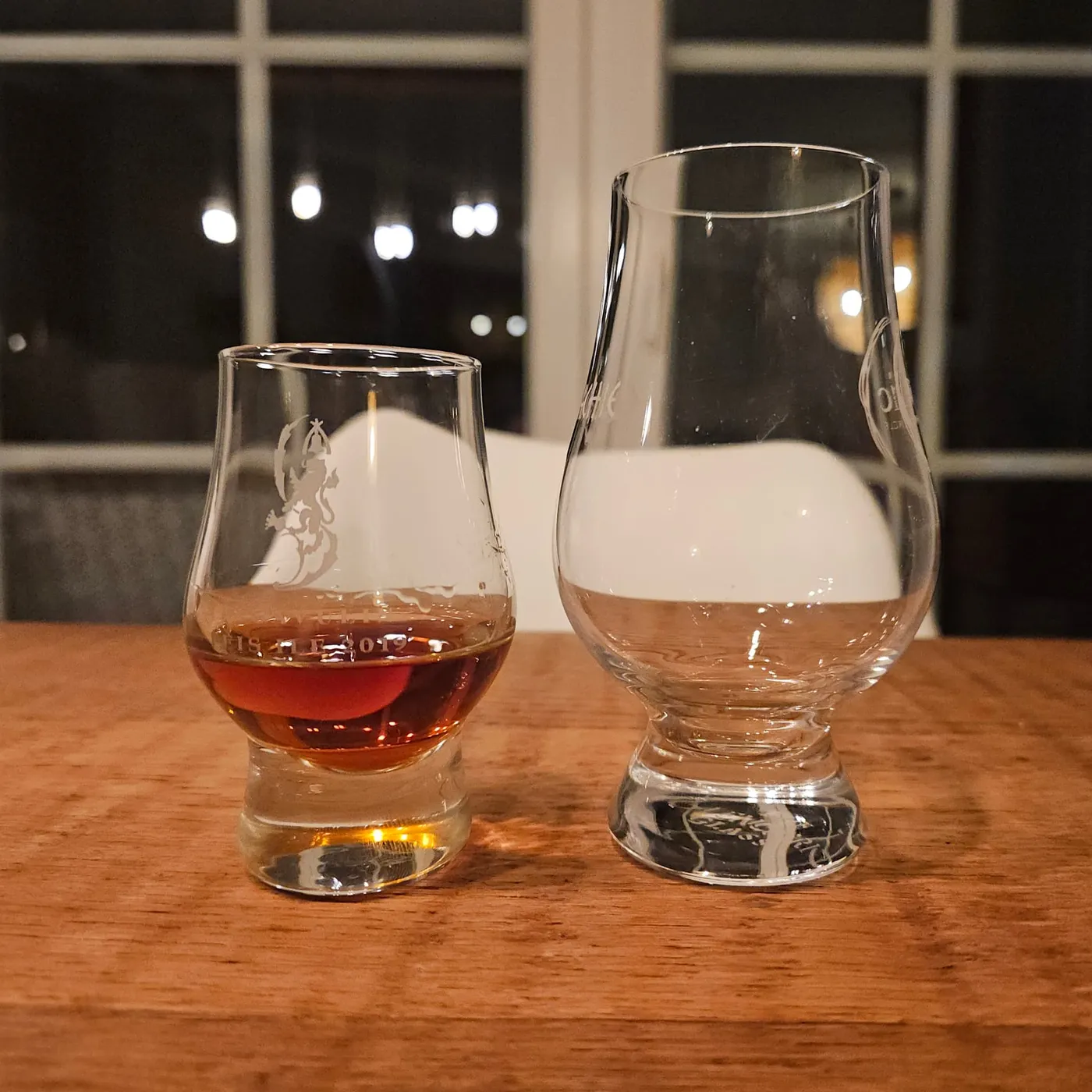
The community story around it is a lesson in itself: RumTaTa organized a group buy of twelve glasses for the thread – and then delivered an honest critique: shape and properties convince, but it remains “an industrially made glass with an ugly seam on the stem”. Anyone who has held genuinely mouth-blown glasses knows the difference. That frustration, incidentally, became the trigger for item 7 on this list.
Community verdict: A great shape with a genuine rum pedigree; opinions diverge on manufacturing quality.
4. Eisch Jeunesse Rum – crystal with a system
Bavarian glassworks Eisch builds a whole family of spirits glasses with its Jeunesse series, developed with spirits expert Jürgen Deibel (Eisch Whisky & Rum). Community member VERSUS lined up and measured four Eisch shapes side by side – from the Unity whisky glass (230 ml) to the Jeunesse Rum Nosing (250 ml, 19.3 cm tall). His practical criterion is delightfully unpretentious: the stem of the big nosing glass “comfortably fits 4 sausage fingers”.
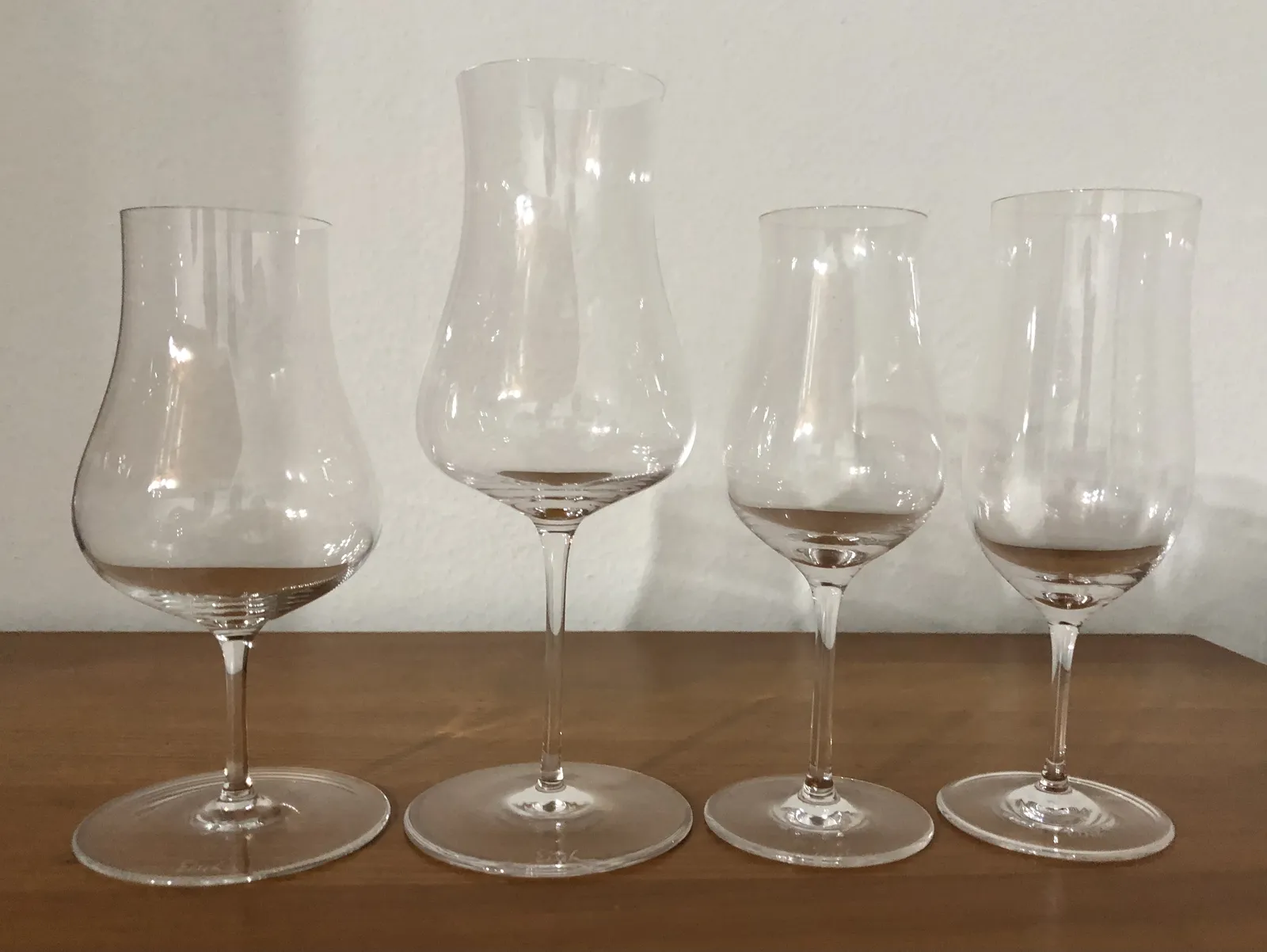
Community verdict: High-quality crystal in the mid price band with a wide range of shapes – good for anyone who wants a stem and elegance without paying Riedel prices.
5. Copita & Spiegelau – the professionals’ classics
The copita, the slim sherry tasting glass on a stem, is the old classic of labs and blending rooms – the Glencairn is ultimately its stemless granddaughter. In the thread, copitas and Spiegelau’s nosing glasses appear as solid, no-drama classics: small opening, precise nosing, no surprises. People who taste many samples in parallel (or take notes during tastings) often reach for the copita for exactly that reason.
6. The bargain hunters’ tips
Five years of thread also produce a budget wisdom no manufacturer likes to hear:
- Luigi Bormioli Vinoteque snifter: costs “not even a tenth” of a Riedel – with similar properties, according to the assessment in the thread.
- Retailer freebie glasses: The nosing glasses some shops add to orders are perfectly fine as everyday and backup glasses – mto75 has accumulated a whole stock that way.
- Discount stores & secondhand: BananaJoe’s haul from a clearance store (photo evidence) is a reminder that good glass shapes can sit on a shelf for next to nothing.
And perhaps the thread’s most grounding note: good rum will, if need be, taste good out of a water glass. The glass extracts the maximum – it doesn’t rescue a bad rum and doesn’t ruin a great one.
7. The one-off: mouth-blown glasses by Olaf Tappert
The most beautiful story of the thread. Searching for a perfect glass without an industrial seam, RumTaTa contacted around ten glassblowers – seven declined. The community struck gold with Olaf Tappert: a paramedic by profession, whisky lover, taught glassblowing by his grandfather, he crafts every glass by hand in his own workshop. Fuwi had his first glasses made right there in the workshop – and in Fuwi and Thunderbird’s direct comparison, Tappert’s “Riffelglas” (ribbed glass) even won against the Blenders favorite when opening a fresh rum:
“Olaf Tappert’s glass really convinces with its wider opening and the small volume needed in the bowl. Clear buy recommendation!” — Fuwi in the thread (translated)
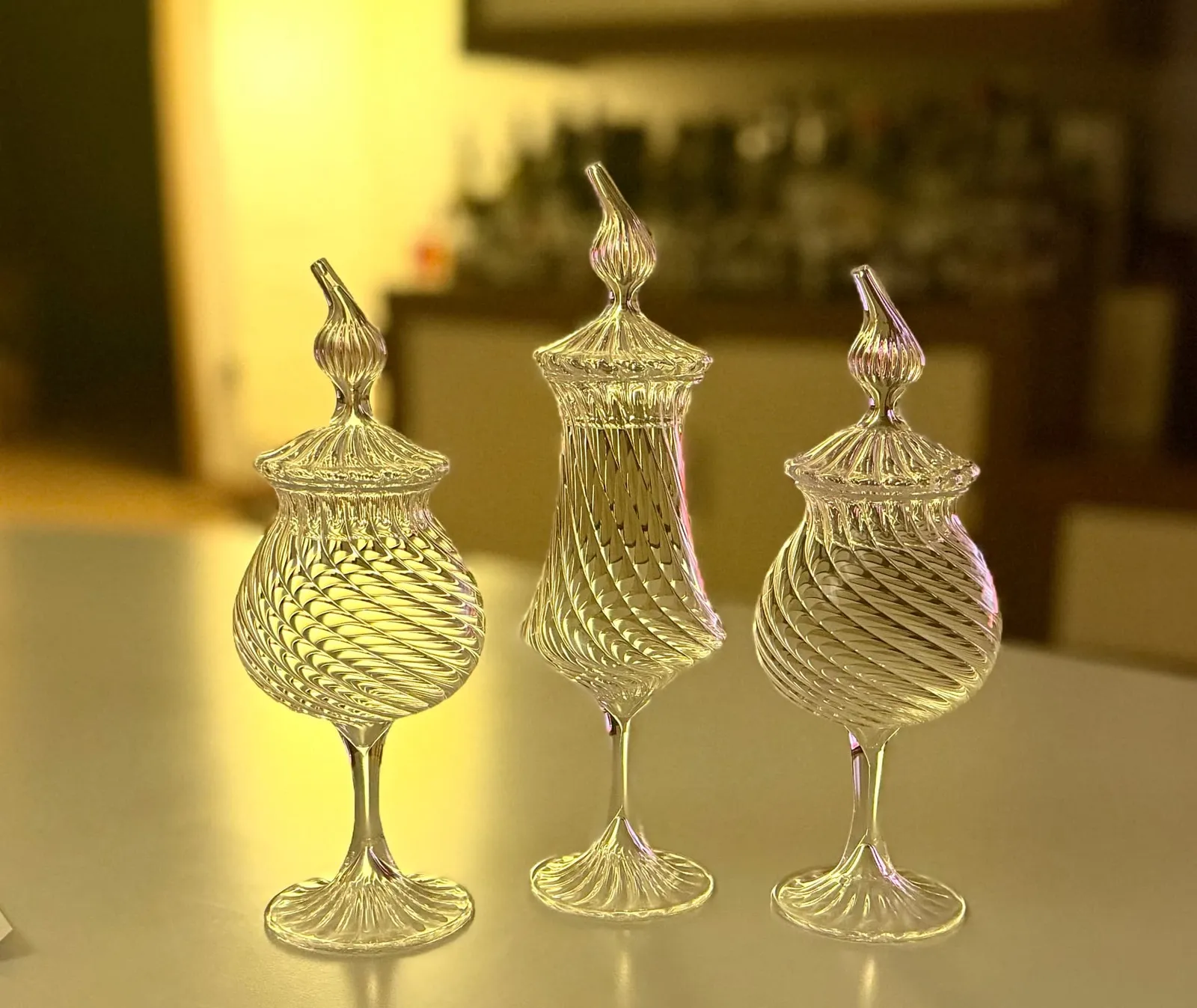
Community verdict: Not a catalog product but a one-off with a story – and proof that this scene’s most exciting discoveries don’t come from wholesale.
Community science: eight glasses, measured
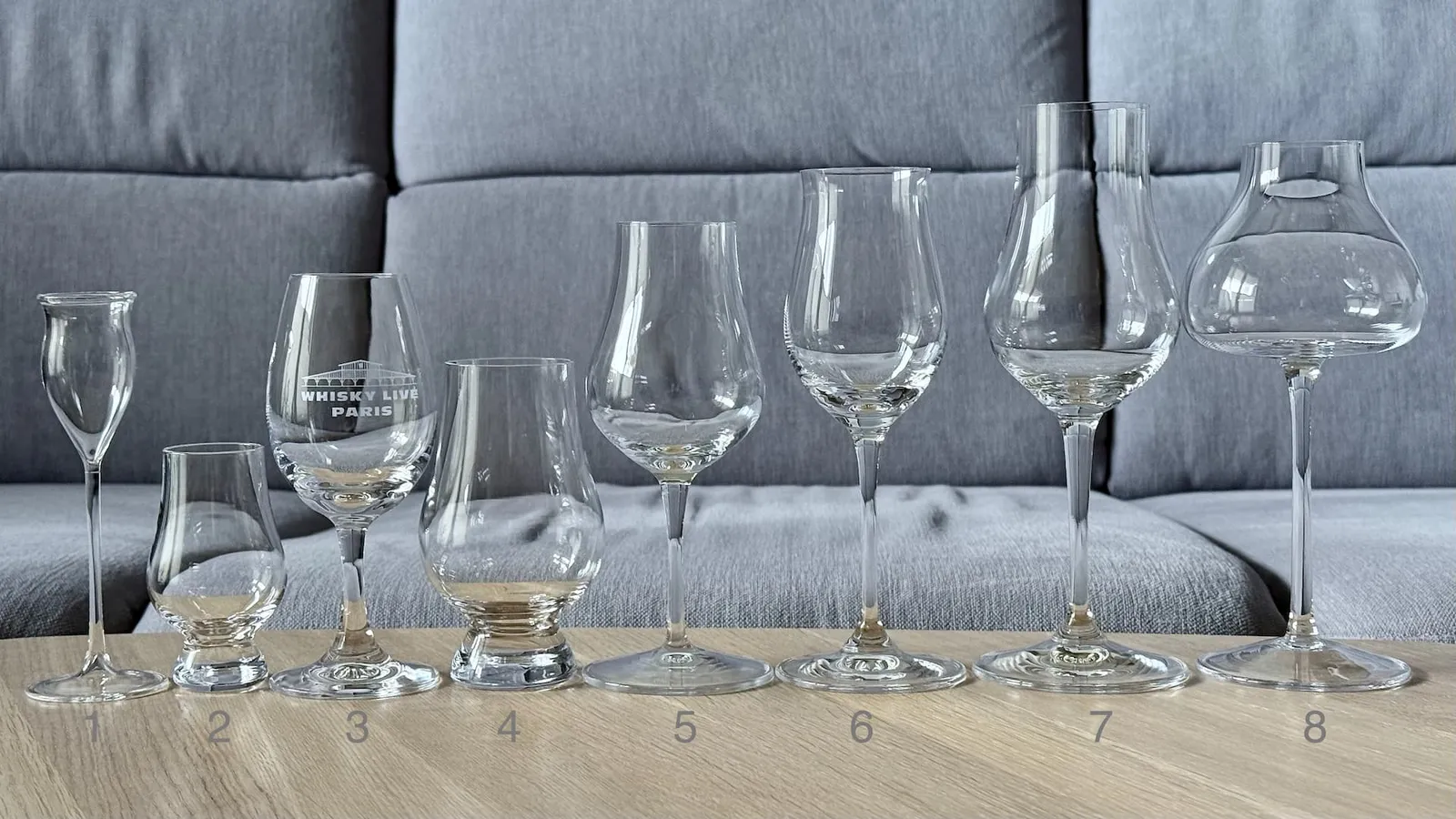
My favorite post of the entire thread – and at 46 likes also its most popular: RumTaTa systematically measured eight glasses. Height, weight, volume, opening diameter, drinking lip, approximate inner surface. You won’t find data like this in any shop:
| Glass | Height | Weight | Volume | Opening ⌀ | Drinking lip | Inner surface ≈ |
|---|---|---|---|---|---|---|
| whisky.de glass | 12.5 cm | 123 g | 200 ml | 6.8 cm | strongly flared | 180 cm² |
| Zwiesel Cognac Magnum Enoteca | 17.8 cm | 134 g | 884 ml | 11.2 cm | curved inward | 450 cm² |
| Riedel “Gargano × Neisson” | 21.3 cm | 130 g | 235 ml | 7.6 cm | slightly flared | 180 cm² |
| 1920s Blender’s Glass | 18.0 cm | 142 g | 225 ml | 8.0 cm | straight | 205 cm² |
| Zwiesel Alloro Whisky | 17.9 cm | 100 g | 294 ml | 7.7 cm | straight | 195 cm² |
| Glencairn | 11.5 cm | 133 g | 190 ml | 6.6 cm | straight | 177 cm² |
| GRF tasting glass | 17.8 cm | 125 g | 180 ml | 6.2 cm | straight | 170 cm² |
| Tappert Companach (smooth) | 15.6 cm | 65 g | 160 ml | 6.5 cm | strongly flared | 153 cm² |
Measurements: RumTaTa, RumX community (April 2024). Inner surface is a rough calculation.
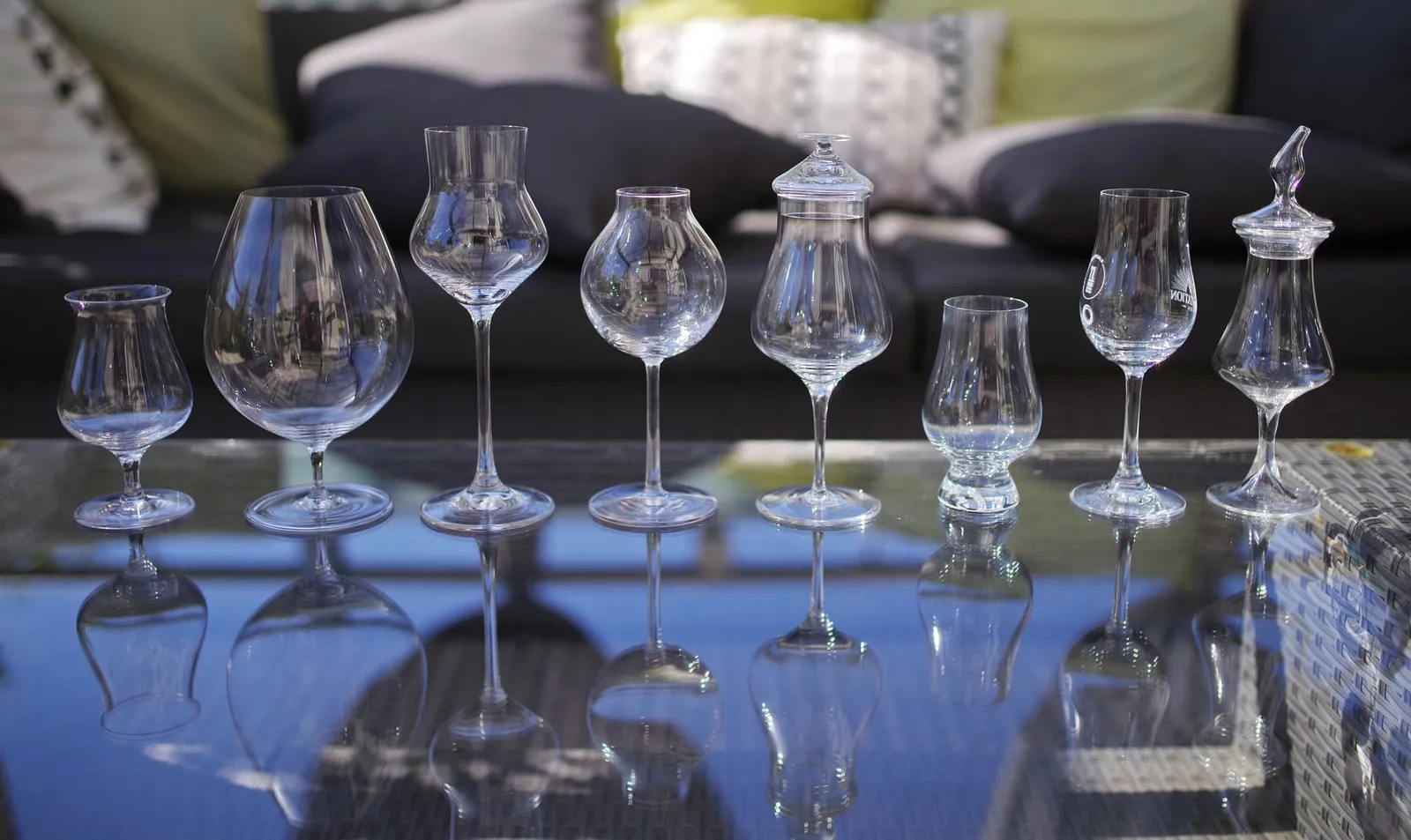
Two things you can read straight off: the huge cognac balloon, at 884 ml capacity and an 11.2 cm opening, is a completely different tool from all the others (lots of surface, but also lots of alcohol at the nose). And the hand-blown Tappert glass weighs just 65 g – barely half of the industrial glasses, exactly the difference you instantly feel in your hand.
Practical tips: how to get more out of any glass
- Pour 2 cl. The bowl needs headspace to work – a glass filled to the brim tastes worse than a modest pour. 2 cl is our standard recommendation, in every glass from the mini Glencairn to the Blenders.
- A fresh glass per rum. When tasting several rums in parallel, don’t rinse the glass with water between pours – water residue and leftover aromas distort the next rum.
- Cover the glass. Button lids or simply a watch glass (about 6 cm diameter fits most nosing glasses) let the rum breathe without the aromas escaping – the standard trick at tastings with multiple glasses.
- Give it time. Freshly opened and high-proof rums in particular need a few minutes in the glass. Nose first, then wait, then judge.
- At cask strength: wider and lower. High alcohol calls for a wider opening, more distance to the nose – or simply a few drops of water.
- On the road: go mini. The “Wee Glencairn” is the community’s proven travel companion for holidays and sample swaps.
- Hand-wash, then smell-check. Rinse-aid residue smells. The nerds’ test: sniff the empty, dry glass before any rum goes in.
Frequently asked questions about rum glasses
Join the discussion – in the thread this guide grew from
This guide is a snapshot, not a final edition – the thread lives on, and the next surprise (a RumX glass by Olaf Tappert? 👀) is probably only a few posts away. Which glass is missing here? What do you taste with? Join the discussion right below – the comments are live-connected to our forum:
Cheers, Oliver (founder, RumX)
This guide is based on an analysis of 227 posts by the RumX community (May 2021 – June 2026), the thread poll (40 participants, multiple choice, as of July 20, 2026), manufacturer information, and the study cited. No affiliate links, no paid placements. Price bands are indicative. Translated quotes are marked. Community photos come from the linked forum thread, with the author credited below each image; illustrations: RumX.
Related articles
What is Rum? Definition, Production & History | RumX
Rum is a spirit made from sugarcane — but raw material, fermentation, distillation, and ageing determine its style and quality. Learn what rum is, how it's made, and how to find the best bottles with RumX.
Read more →
Rum Glossary: Key Terms Every Rum Lover Should Know
From ABV to White Rum — learn the essential rum terminology. A complete glossary of rum production, styles, and tasting terms.
Read more →
Rum Collecting for Beginners
Part 1 of the RumX Collector Series, drawing on data from over 50,000 registered RumX users. In partnership with Catawiki.
Read more →